
BPH Release Role
The California Board of Parole Hearings conducts parole suitability proceedings and nonviolent offender parole reviews for incarcerated adults under CDCR jurisdiction. For Alpine County release research, BPH matters only when an Alpine conviction led to a state-prison case that is parole eligible. It is not the same as CDCR Division of Adult Parole Operations supervision, and it is not the same as county probation or PRCS.
A BPH grant does not mean an immediate same-day release. Research section 17 notes that decisions are proposed and subject to review/finality rules. Hearing results can help confirm that parole was granted, denied, continued, or reviewed en banc, but final release confirmation still needs CDCR and parole records, plus the Alpine court sentence if the commitment county is in question.
The BPH hearing schedule is the key public calendar source. The screenshot below is relevant because it shows the state hearing channel, not a county jail release list.
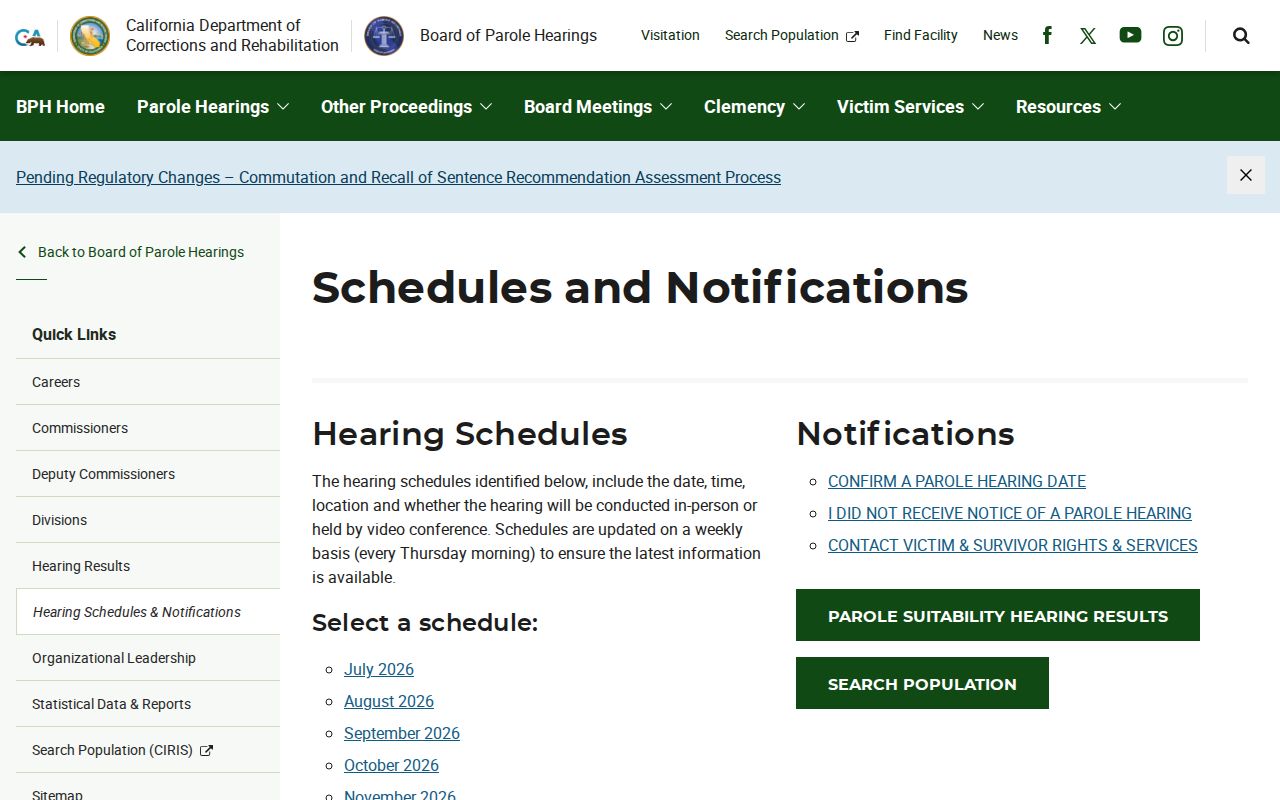
Use BPH to understand suitability proceedings, then verify actual release through CDCR or parole records.
Check BPH Hearing Schedules
The hearing schedule page states that schedules include date, time, location, and whether the hearing will be in person or by video conference. Research section 17 states the schedule is updated weekly on Thursday mornings. For an Alpine case, first confirm that the person is in CDCR custody and parole eligible, then use the institution and last name to locate the hearing.
- Open the BPH hearing schedule page.
- Select the relevant month.
- Locate the institution and the person's last name.
- Confirm date, time, location, and video or in-person status.
- Recheck because schedules can change before the hearing date.
BPH Hearing Results
The BPH results page lists recent proceedings by week. Older BPH terminology defines several common outcomes. Grant means the person was found suitable for parole, subject to statutory review and finality rules. Deny means parole was not granted. Continue means the hearing began but could not be completed and must be scheduled again. En banc review involves full-board review in certain circumstances, and en banc decisions are posted after Executive Board action.
| Outcome | Release meaning |
|---|---|
| Grant | Suitability found, but not identical to immediate release |
| Deny | No parole release from that hearing |
| Continue | Hearing needs completion later |
| En banc | Full-board review may affect final outcome |
Alpine Parole Confirmation Stack
For Alpine County, BPH is one layer in a state-prison release stack. Alpine Superior Court shows the sentence or commitment. CDCR CIRIS and the Identification Unit help confirm state custody. BPH shows hearing schedules and outcomes for eligible matters. DAPO or parole documents show supervision after release. If the person was only held in El Dorado or Calaveras before a local case ended, BPH is not the correct system.
Penal Code section 3041 is the eligibility statute captured in the research. It describes BPH timing and review around minimum eligible parole dates. The practical rule is simple: an eligibility date and a hearing date are not the same as actual release.
Hearing Date vs Release
A hearing date is a process date. It is not a release date. BPH schedules show when the suitability question may be heard, where it is held, and whether it is in person or by video. Results show the panel outcome, such as grant, deny, or continue. A grant can still be subject to review before it becomes final, and the actual custody release must be confirmed through CDCR and parole records.
For an Alpine County conviction, the path begins with Alpine Superior Court because the court record confirms whether the sentence was an indeterminate or parole-eligible CDCR matter. If the person is in CDCR, CIRIS may show BPH dates or outcomes for current custody. BPH pages then add schedule and result context. DAPO or parole documentation becomes relevant after release. That sequence keeps BPH from being misused for local jail releases, short county sentences, or probation-only cases.
BPH records are most helpful when a family member, attorney, or case participant already knows the person is serving a CDCR term and needs to understand parole suitability timing. They are not a broad list of recently released Alpine County inmates. If the person left El Dorado or Calaveras custody after bond, time served, dismissal, or local sentencing, the correct confirmation remains with the holding jail and Alpine court.
BPH Record Checklist
For a BPH search, start with the CDCR number, full legal name, current or last institution, Alpine sentencing court, and expected hearing month. Use the schedule for upcoming proceedings and the results page for recent outcomes. If a grant appears, confirm final release through CDCR because BPH outcomes can be subject to review periods. If the result is deny or continue, the person may remain in CDCR custody unless another release authority applies. For supervision after release, use DAPO or parole documents rather than the hearing calendar.
Public Record Search
Sponsored Results